
In 1942 the federal War Relocation Authority built two camps in Southeast Arkansas to hold Japanese Americans forced from their homes during World War II. Rohwer, in Desha County, and Jerome, which spanned Chicot and Drew counties, were the only two of the agency’s camps in the Jim Crow South, according to the Densho Encyclopedia. At their peaks in early 1943, the two camps together held nearly 17,000 incarcerated Japanese Americans (WRA statistical report, 1946).
Most people held at Rohwer came from Los Angeles County or the San Joaquin Valley of California, by way of the Santa Anita and Stockton assembly centers (Densho). Jerome received more than 800 people directly from Hawai’i, the largest group sent to any of the camps (Densho).
Jerome was the last of the camps to open and the first to close, on June 30, 1944. Nearly 2,500 people were then moved to Rohwer (Densho), which stayed open until Nov. 30, 1945 (WRA statistical report; Densho). Within weeks, the Jerome site became Camp Dermott, a camp for German prisoners of war (Densho).
State leaders were openly hostile. In February 1943, Gov. Homer Adkins signed a land law that targeted U.S.-born Japanese Americans as well as immigrants; it was later found unconstitutional (Densho).
The Rohwer camp cemetery was listed on the National Register of Historic Places in 1974 and became a National Historic Landmark in 1992. The National Park Service calls it one of only three surviving Japanese American confinement-site cemeteries in the country (NPS). A memorial marker at the Jerome site was finished in 1992 on donated land (Densho). Actor George Takei, who was incarcerated at Rohwer as a child, is featured on audio stations along a walking tour of the Rohwer site, and the World War II Japanese American Internment Museum in McGehee opened in 2013 (Densho).
Key facts
- Rohwer opened Sept. 18, 1942, and closed Nov. 30, 1945. (Source: WRA, The Evacuated People (1946))
- Jerome opened Oct. 6, 1942, and closed June 30, 1944, the last camp to open and the first to close. (Source: Densho Encyclopedia)
- Rohwer covered 10,161 acres of wooded swampland in Desha County. (Source: Densho Encyclopedia)
- The Jerome project site covered 9,374 acres in Chicot and Drew counties; most of the housing area was in Chicot County. (Source: Densho Encyclopedia)
- More than 10,000 people passed through Rohwer, and more than two-thirds of them were U.S. citizens. (Source: National Park Service)
- Rohwer and Jerome were the only War Relocation Authority camps in the Jim Crow South. (Source: Densho Encyclopedia)
Timeline
Rohwer opens
Jerome opens
Jerome reaches its peak population of 8,497
Gov. Homer Adkins signs a land law aimed at Japanese Americans
It was later found unconstitutional.
Rohwer reaches its peak population of 8,475
Jerome closes; nearly 2,500 people are moved to Rohwer
Rohwer closes
Rohwer cemetery added to the National Register of Historic Places
Rohwer cemetery named a National Historic Landmark
Photos
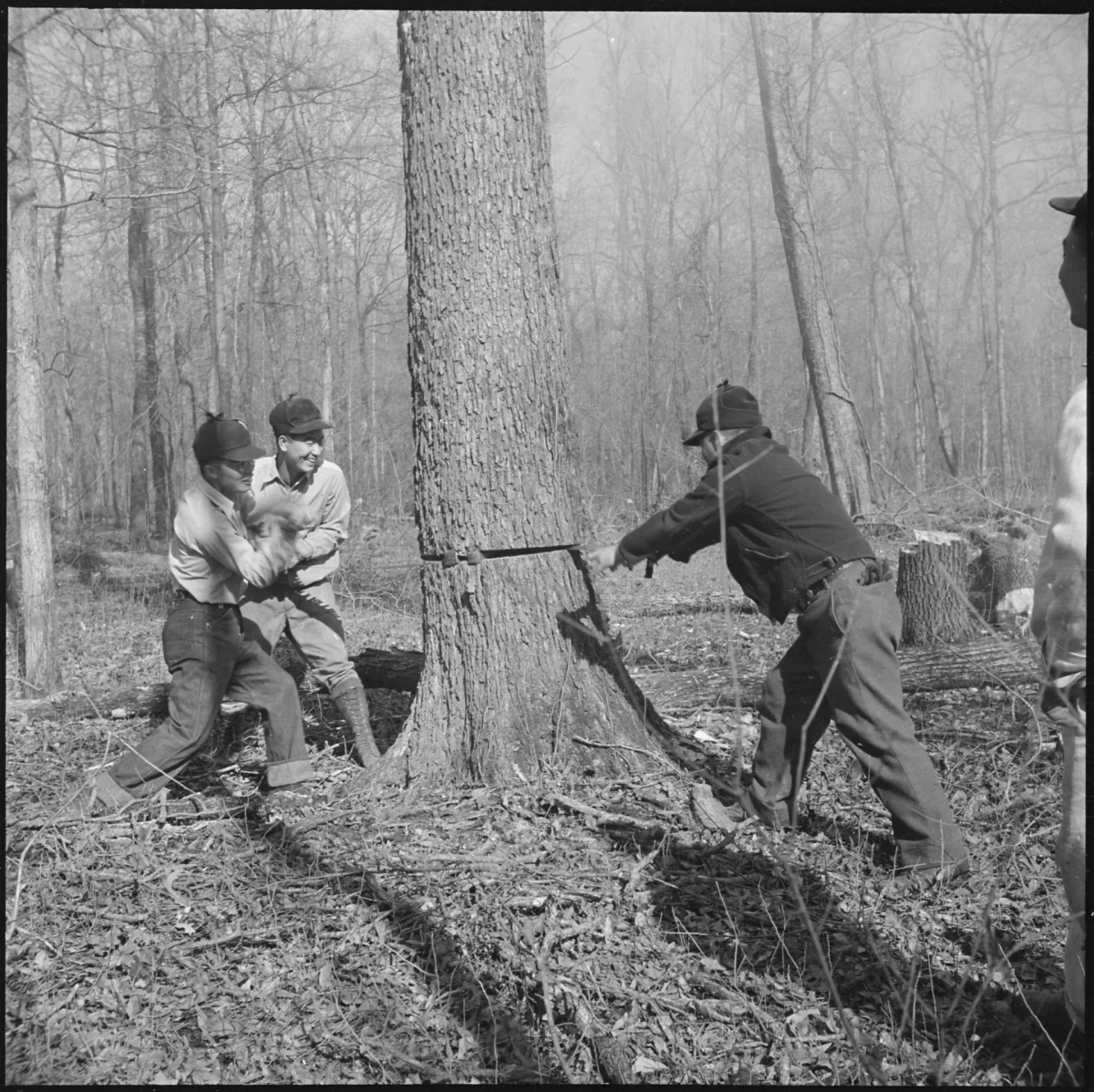
Incarcerated Japanese Americans fell a red oak while clearing land for farming at Rohwer. Photo: Tom Parker, War Relocation Authority; National Archives, March 7, 1943. Public domain (U.S. government work). Source 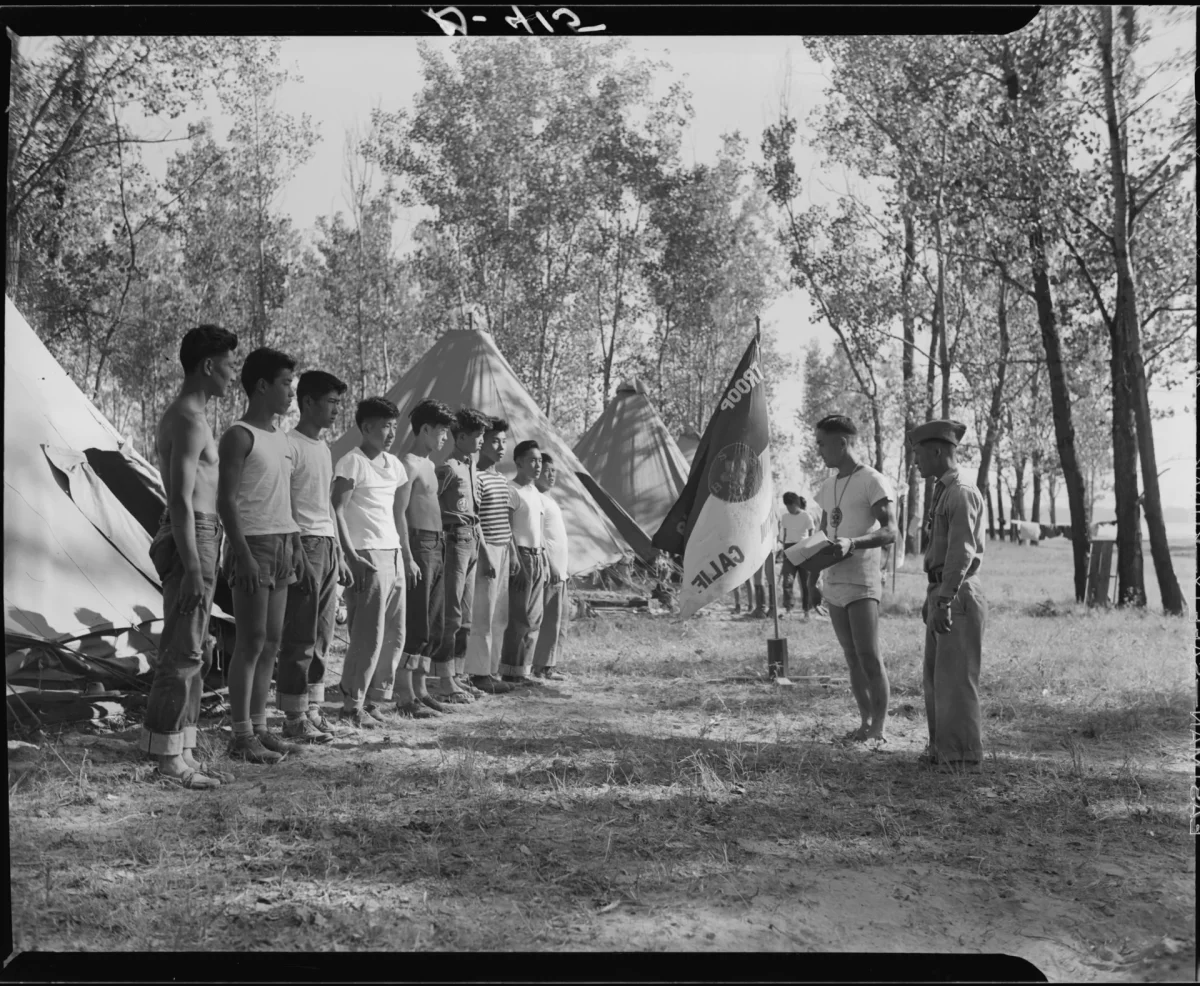
Boy Scouts from the Rohwer camp at a five-day camp on the bank of the Mississippi River. Photo: War Relocation Authority (photographer not named); National Archives, Aug. 19, 1943. Public domain (U.S. government work). Source 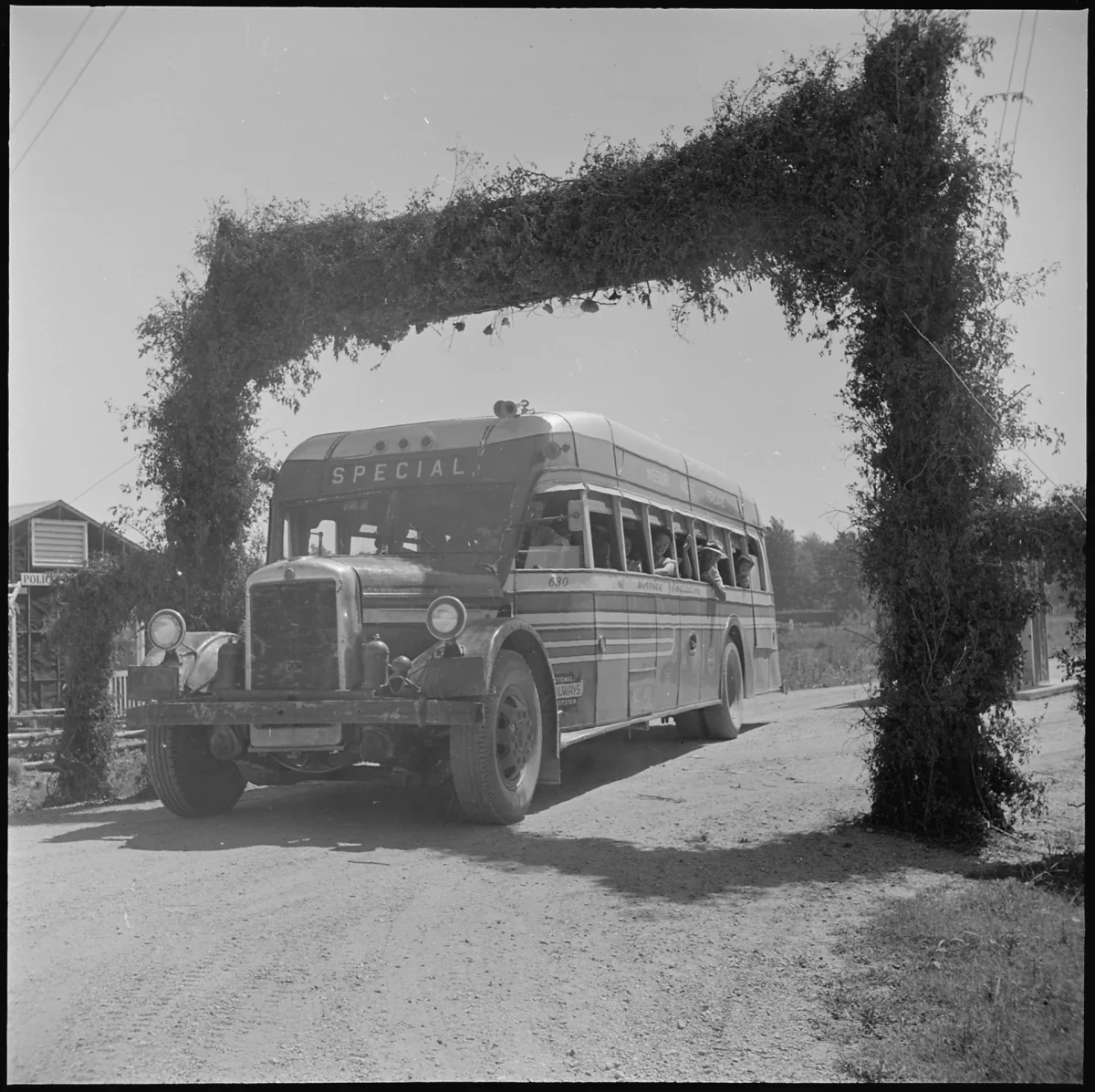
As Jerome closed, a bus carrying people from that camp passes under the "Welcome" arch at Rohwer. Photo: Hikaru Iwasaki, War Relocation Authority; National Archives, June 21, 1944. Public domain (U.S. government work). Source 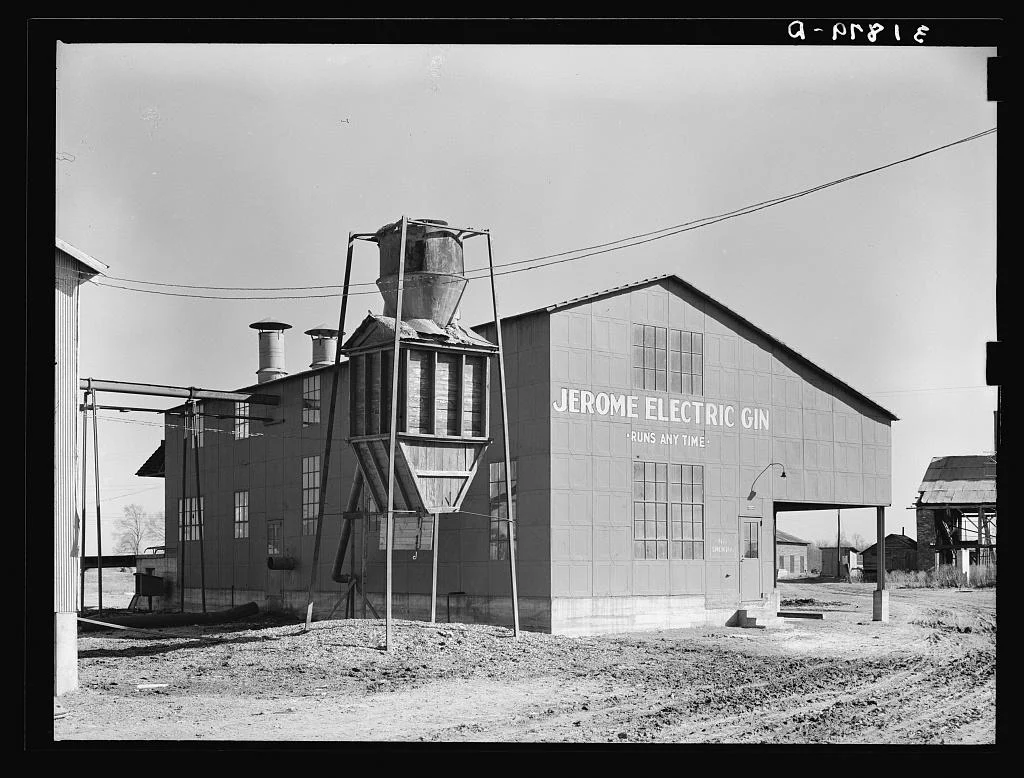
The cotton gin in the town of Jerome, before the camp was built about a mile north of town. Photo: Russell Lee, Farm Security Administration; Library of Congress, January 1939. No known restrictions (Library of Congress). Source
Data
| Camp | County | Opened | Closed | Peak population |
|---|---|---|---|---|
| Rohwer | Desha | Sept. 18, 1942 | Nov. 30, 1945 | 8,475 (March 11, 1943) |
| Jerome | Chicot and Drew | Oct. 6, 1942 | June 30, 1944 | 8,497 (Feb. 11, 1943) |
Source: War Relocation Authority, The Evacuated People (1946), Table 5.
Sources
- Rohwer, Densho Encyclopedia (Brian Niiya). Accessed .
- Jerome, Densho Encyclopedia (Brian Niiya). Accessed .
- The Evacuated People: A Quantitative Description (1946), Table 5, War Relocation Authority, U.S. Department of the Interior. Accessed . Copy hosted by npshistory.com.
- Rohwer Relocation Center Memorial Cemetery, National Park Service. Accessed .
- Rohwer Relocation Center Memorial Cemetery (92001882), National Register of Historic Places. Accessed .
- Rohwer Relocation Center Site (74000474), National Register of Historic Places. Accessed .