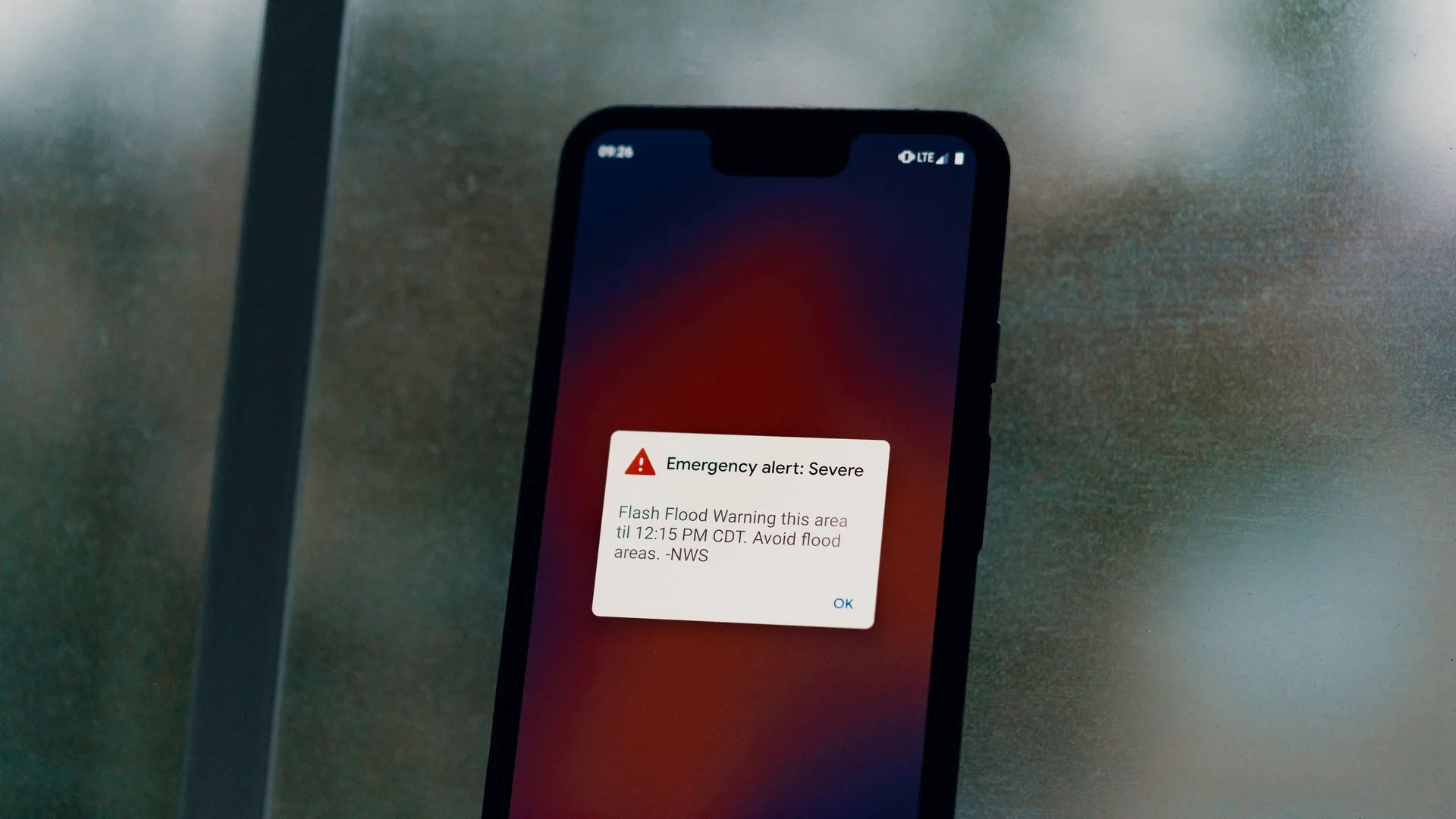
Emergency alerts could one day reach cellphones by satellite when storms knock out cell towers, under a law President Donald Trump signed Thursday.
The White House listed H.R. 7022, the Mystic Alerts Act, among the bills signed Oct. 22. The law tells the Federal Communications Commission to write rules so wireless carriers can send emergency alerts by satellite as well as through cell towers.
Why Congress passed it
The bill is named for Camp Mystic in Kerrville, Texas. According to a statement from Sen. John Cornyn’s office, the July 4, 2025, Hill Country flood killed 28 people at the camp and more than 100 others across Central Texas. The statement said there were multiple reports of alerts that never arrived after the flood damaged cell networks.
Rep. August Pfluger of Texas sponsored the bill. The House passed it unanimously April 20, and the Senate passed it unanimously before sending it to the president. Cornyn and Sen. Jon Ossoff of Georgia led it in the Senate. “My legislation will ensure that Americans in rural areas receive life-saving alerts when disaster strikes and traditional networks fail,” Pfluger said in the statement.
What the law requires
- FCC rules: The FCC must propose rules within six months and issue final rules within 18 months, working with the Department of Homeland Security and FEMA, according to the enrolled bill text.
- Carrier choice: Carriers that already send wireless emergency alerts and offer satellite service must tell the FCC whether they will send alerts by satellite. A carrier that says no must notify its customers.
- No extra fee: Carriers that send satellite alerts cannot charge separately for them.
- Opt-outs carry over: If a customer has turned off certain alerts on a phone, those alerts stay off by satellite too.
- Liability: Carriers that follow the rules are shielded from lawsuits over sending or failing to send a satellite alert.
When it could start
Satellite alerts will not arrive right away. The final rule takes effect 36 months after it is published, or 12 months after DHS and FEMA put their supporting standards in place, whichever comes later. Carriers then have 60 days to file their choice with the FCC.
What it means for Southeast Arkansas
Tornado and flash flood warnings from the National Weather Service reach many phones in Drew, Ashley, Chicot and Desha counties through these wireless alerts. Until the satellite rules take effect, alerts still depend on working cell towers. Residents can keep a weather radio as a backup. The Arkansas Division of Emergency Management coordinates state disaster response.